
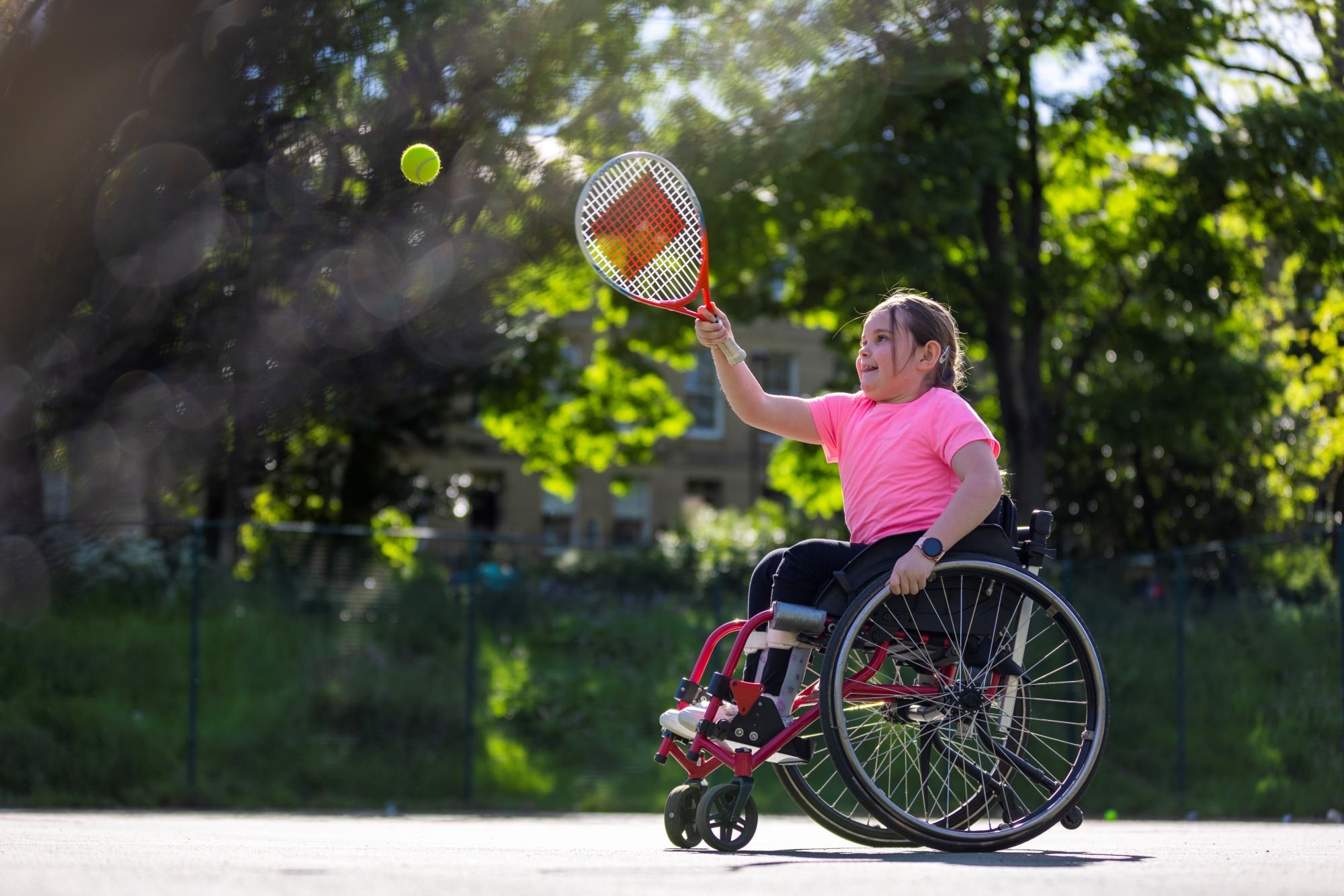
Research
Building the Path to Treatments
for Children with SPG4
The Lilly and Blair Foundation funds research with a single goal: moving promising therapies closer to children with SPG4. We invest across the full translational pipeline — from developing the medicines themselves to building the clinical infrastructure needed to test them in humans.
Nearly $600,000
Committed to childhood-onset SPG4 research
5
Research institutions funded across the U.S.
3
Coordinated research pillars driving the pipeline
Our Research Strategy
We invest across three interconnected pillars that together create the pathway from scientific discovery to patient care.
01
Therapeutic Development
Engineering the medicines — gene therapy, drug repurposing, ASOs, and precision editing — to fix the genetic root of SPG4.
Because no single approach is guaranteed to succeed, we invest in multiple therapeutic strategies simultaneously — increasing the likelihood of delivering meaningful treatments while reducing the risk of a single-path failure.
-
Gene Therapy (AAV-hTRF1-SPAST Gene Therapy)
An AAV vector engineered with a transferrin receptor-targeted capsid delivers a healthy SPAST gene directly to motor neurons. This "Silence and Replace" approach shuts down the harmful mutant protein signal while restoring functional expression — with carefully tuned dosing to avoid the overexpression toxicity seen in earlier models. A successful treatment could halt disease progression with a single administration.ASOs (Antisense Oligonucleotides)
ASOs are precision genetic strands designed to intercept and destroy mutant SPG4 RNA before it is translated into the toxic protein that damages motor neurons. Because ASOs must match human DNA exactly, they require the Humanized R499H Mouse Model — funded entirely by The Lilly and Blair Foundation — as their testing platform. ASOs are tunable and reversible, making them a uniquely flexible therapeutic option for children.Drug Repurposing and Therapeutic Discovery
High-throughput screening on patient-derived SPG4 cells identifies existing FDA-approved compounds — particularly HDAC6 inhibitors and microtubule-stabilizing agents — that can restore nerve function. Because these drugs already have established safety profiles, they can enter SPG4 clinical trials far faster than a new compound, potentially reaching children while longer-term genetic therapies continue to advance.Combinatorial and Supportive Therapies
Fixing the gene alone may not restore function in nerves already damaged. Collaborators are researching M1 antibodies to clear existing toxic proteins, neurostimulation to encourage nerve re-sprouting, and small molecules like AKV9 for neuroprotection. The goal is a combination approach that doesn't just stop the disease — it actively helps children recover function.Gene and Prime Editing
Rather than adding a new gene, prime editing corrects the mutation directly within the child's own DNA — allowing the cell's natural regulatory systems to control spastin levels automatically. This bypasses the precise dosing challenges of traditional gene therapy and represents a permanent, self-regulating correction. We are tracking this technology as it matures toward clinical viability.
02
Modeling & Testing Platforms
Building the living laboratories — from humanized mice to 3D brain organoids — required to prove therapies are safe and effective.
Promising therapies require equally powerful tools for evaluation. We invest in the platforms that allow researchers to understand SPG4 biology, evaluate emerging therapies, and generate the preclinical data needed before treatments can advance toward human studies.
-
The R499H Humanized Mouse Model
Standard mice lack the human SPAST gene, making them invisible to precision medicines like ASOs. The Lilly and Blair Foundation fully funded the creation of a humanized mouse carrying the human gene with the severe R499H mutation — now the global gold standard for testing clinic-ready SPG4 therapies. It provides the safety and efficacy data the FDA requires before any therapy can advance to human trials.Large animal science
SPG4 Cattle at Hillcrest Farm
Hillcrest Farm
Dosing and delivery methods that work in mice frequently fail to scale to the complexity of a human nervous system. A dedicated herd of SPG4-affected cattle — whose spinal cord length and anatomy more closely resemble a child's — allows us to refine delivery techniques like IV and spinal injection before moving into the clinic, significantly improving the odds of trial success.
Brain organoids
3D Brain Organoids
Drexel University — Qiang Lab
The Qiang Lab has grown three-dimensional brain organoids from the stem cells of children with the R499H mutation — creating miniature human neural structures that carry the exact DNA of specific patients. These serve as the primary platform for drug repurposing screens and gene therapy testing, allowing researchers to observe how human neurons respond to treatments in real time before animal studies begin.
03
Clinical Trial Readiness
Establishing the biomarkers, natural history data, and patient infrastructure the FDA requires before a therapy can enter human trials.
Even the most promising therapy cannot reach children without the infrastructure needed to support a clinical trial. We invest in the data, biomarkers, and patient resources that make SPG4 a trial-ready disease.
-
Biomarker Discovery
The FDA requires measurable proof that a therapy is working — but no blood biomarker has ever existed for SPG4. Fully funded by The Lilly and Blair Foundation, Boston Children's Hospital is using the ultra-sensitive NULISAseq platform to identify a protein fingerprint that changes as SPG4 progresses. A validated biomarker compresses clinical trial timelines dramatically: instead of waiting years to measure physical improvement, researchers could confirm a therapy is working within weeks.SP-CERN Natural History Study
Regulators cannot evaluate whether a treatment works without understanding how the disease naturally progresses. SP-CERN — the global SPG4 registry led by Dr. Darius Ebrahimi-Fakhari — collects standardized clinical assessments, gait analysis, and biosamples from patients over many years, defining the disease trajectory and identifying the intervention windows where treatments will have the greatest impact.SPG4 Biobank — Coriell Institute
Researchers cannot study SPG4 without access to patient cells. The NIGMS Repository at the Coriell Institute centralizes blood and skin samples from SPG4 patients — making them available to scientists worldwide. The brain organoids grown at Drexel were built from samples in this biobank. Every family contribution enables a new line of research that would otherwise be impossible.HSPseq Genomic Sequencing
Not every child with spasticity receives a clear genetic diagnosis. HSPseq — led by Boston Children's Hospital — combines advanced genomic sequencing with clinical data for patients aged one month to thirty years, identifying new causal genes and better defining the full spectrum of SPG4. Earlier diagnosis means earlier intervention, and ensures that as therapies come online, every eligible child is correctly identified and ready to receive treatment.
2026 Strategic Research Grants
In July 2026, The Lilly and Blair Foundation awarded two Strategic Research Grants totaling a $300,00 commitment to accelerate therapeutic development and translational research across two complementary areas.
Gene Therapy Optimization
Miguel Sena-Esteves, PhD
UMass Chan Medical School
$75,000 per year · 2026–2027
Advances mutation-agnostic gene therapy for SPG4 by optimizing vector design, delivery, and expression to improve safety and effectiveness before clinical translation.
Drug Repurposing and Therapeutic Discovery
Liang Oscar Qiang, MD, PhD
Drexel University College of Medicine
$75,000 per year · 2026–2027
Evaluates therapeutic candidates in patient-derived SPG4 models to identify treatments that may reach clinical testing more rapidly than traditional drug development pathways.
Funding Timeline
Humanized R499H Mouse Model
$49,125 · Modeling and Testing · Drexel University College of Medicine · Cyagen
AAV9 Gene Therapy Program — First Three Aims
$150,000 · Therapeutic Development · Boston Children's Hospital, UMass Chan Medical School, University of Wisconsin–Madison · $50,000 each
Therapeutic Development Bridge Support
$25,000 · Therapeutic Development · Drexel University College of Medicine
Patient-Derived hiPSC Models
$5,000 · Modeling and Testing · Drexel University College of Medicine
Therapeutic Development Ongoing Support
$8,334 · Therapeutic Development · Drexel University College of Medicine
Patient-Derived hiPSC Models Ongoing Support
$8,333 · Modeling and Testing · Drexel University College of Medicine
SPG4 Cattle Funding
$5,640 · Modeling and Testing · Hillcrest Farm · Through December 2025
SP-CERN NULISA Biomarker Study
$20,000 · Clinical Trial Readiness · Boston Children's Hospital
SPG4 Cattle Funding Continuation
$7,045 · Modeling and Testing · Hillcrest Farm · January–April 2026
Gene Therapy Optimization
$75,000 · Therapeutic Development · UMass Chan Medical School · Miguel Sena-Esteves, PhD · Year 1 of 2
Drug Repurposing and Therapeutic Discovery
$75,000 · Therapeutic Development · Drexel University College of Medicine · Liang Oscar Qiang, MD, PhD · Year 1 of 2
TFRC (Transferrin Receptor) Rat Funding
$3,250 · Modeling and Testing · UMass Chan Medical School · July 2026
Gene Therapy Optimization
$75,000 committed · Therapeutic Development · UMass Chan Medical School · Miguel Sena-Esteves, PhD · Year 2 of 2
Drug Repurposing and Therapeutic Discovery
$75,000 committed · Therapeutic Development · Drexel University College of Medicine · Liang Oscar Qiang, MD, PhD · Year 2 of 2
Research Collaborators
-

Darius Ebrahimi-Fakhari, MD, PhD
-

Peter Baas, PhD
Liang Oscar Qiang, MD, PhD
Emanuela Piermarini, PhD -

Miguel Sena-Esteves, PhD
Heather Gray-Edwards, DVM, PhD -

Anjon Audhya, PhD
Molly Lettman, PhD
Foundation and Industry Partners





What happens next depends on how quickly we move.
Your support accelerates progress toward real treatments for children with SPG4.